Why Many AEM Projects Fail After 2-5 Years, And How to Prevent It
 Daniel Strmečki
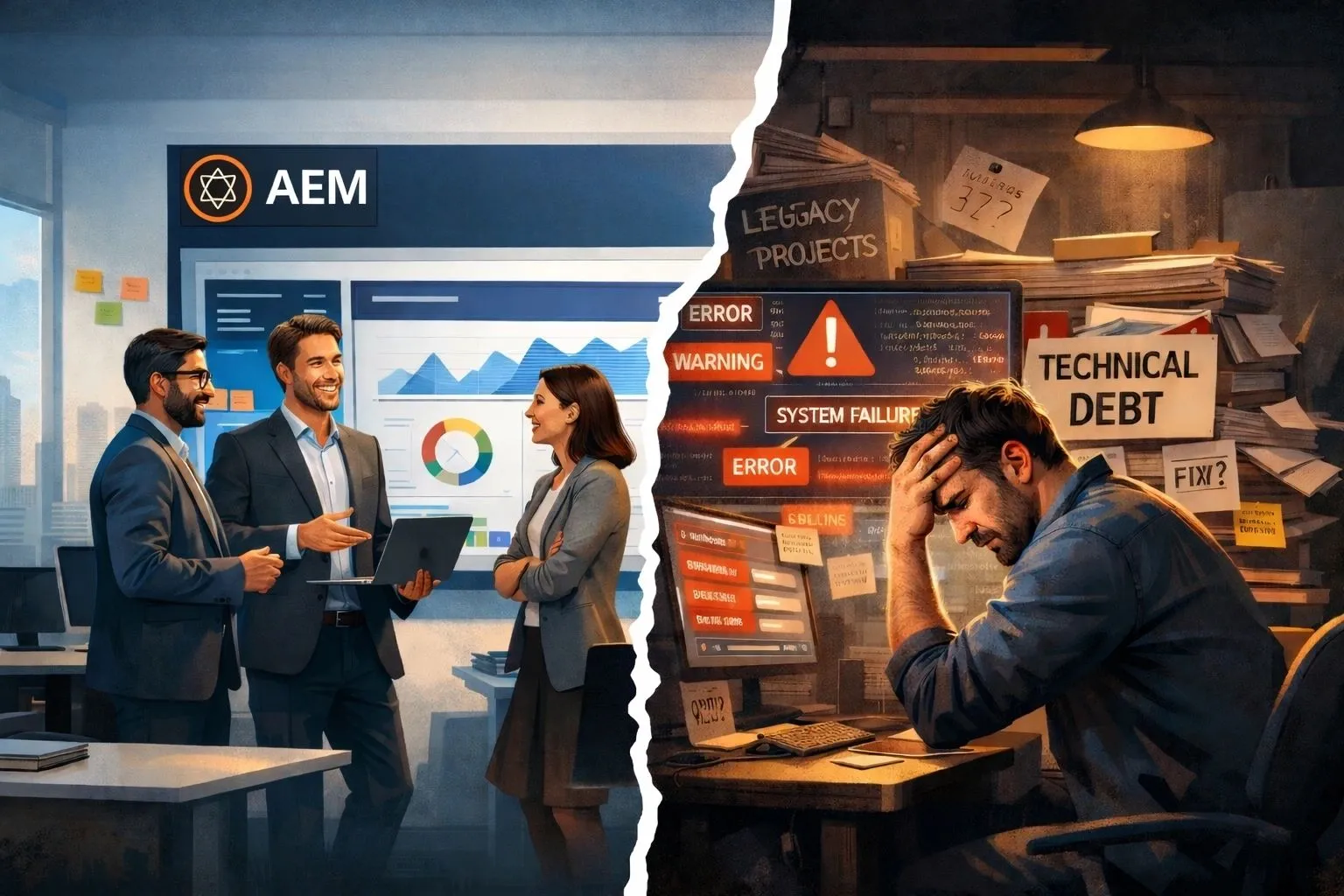
Enterprise AEM projects rarely fail at launch. They tend to fail years later, when change becomes slow, risky, and disproportionately expensive. Most AEM implementations go live successfully. Content is published, campaigns run, integrations work, and stakeholders are satisfied. From a delivery perspective, the project appears successful.
The structural problems surface later. Changes start taking weeks instead of days. Performance optimizations don’t hold. SEO metrics fluctuate without clear causes. Upgrades require extensive regression cycles. Teams become hesitant to introduce improvements because the platform feels fragile and overly complex.
The platform still functions. But every change carries uncertainty, and the cost of evolution steadily increases.
AEM Projects Rarely Fail Early
AEM platforms typically begin with a solid architectural foundation. Senior architects define patterns, establish conventions, and apply best practices. In the early phases, the implementation often looks clean and coherent.
The issue is rarely obvious design flaws. The deeper problem is that many AEM platforms are optimized for initial delivery milestones rather than for years of continuous change and evolution. AEM does not stand still; it constantly evolves, so implementations that are not built for change quickly fall behind the product they rely on.
Complexity does not appear as a single architectural mistake. It emerges gradually, through hundreds of individually reasonable decisions made under time pressure or lack of implementation know-how. Each component, customization, integration, and exception may seem justified in isolation, but over time, they create a system that becomes increasingly difficult to understand and safely modify.
The Slow Failure Pattern
After two to five years in production, similar patterns tend to appear. Small changes begin to require coordination across multiple teams. Releases feel increasingly unpredictable and risky. Performance improvements do not hold over time, and SEO issues resurface despite repeated fixes. Upgrades or cloud migrations start to feel disproportionately complex and expensive.
At this stage, the platform itself is often blamed. In most cases, that diagnosis is incorrect. Adobe Experience Manager is a mature enterprise platform that evolves continuously. When used well, it can support large-scale, long-lived systems.
AEM projects fail because of delivery and ownership models, not because of the product. I've personally worked on AEM platforms that reliably support hundreds of websites in production for years. That kind of stability does not happen by chance. It is the result of disciplined architecture and consistent ownership.
The Real Causes Behind Failure
Architecture That Does Not Survive Delivery
In many enterprises, senior architects design a solid AEM architecture and then disengage.
Delivery is handed over to teams that were not involved in the original architectural decisions, often selected primarily for cost rather than continuity. Architectural intent erodes. Shortcuts become permanent. Trade-offs are made without understanding long-term consequences.
Architecture does not fail at design time. It fails when no one remains accountable for it during delivery.
Overusing AEM for Problems It Should Not Solve
A very common pattern in failing AEM platforms is this: Every requirement is solved inside AEM. Business logic, integrations, orchestration, transformations, and custom workflows are pushed into AEM components, OSGi services, and custom bundles. Over time, AEM becomes a monolith responsible for everything.
This leads to:
- Too many custom components
- Tight coupling between content, logic, and delivery
- Difficult upgrades and cloud migration
- Increased operational and cognitive complexity
Instead of building microservices around AEM, teams constantly keep extending AEM itself. The platform becomes unnecessarily complex and does much more than a CMS should, becoming harder to change with every new requirement.
Component and Page Template Explosion
Another common long-term failure pattern in AEM platforms is the uncontrolled growth of components and templates.
In many projects, new components are created for every variation, campaign, or edge case instead of evolving and standardizing existing ones. Templates multiply as teams attempt to isolate use cases rather than simplify them. Over time, the component library becomes large, inconsistent, and difficult to reason about.
What initially feels like flexibility gradually turns into fragmentation. The cost of maintaining the component layer grows steadily, even when business requirements remain stable. Without architectural discipline and continuous simplification, the platform accumulates complexity at the presentation layer, which is often hard to untangle later.
No Continuous Visibility Into Technical Debt
Technical debt in AEM platforms is rarely visualized, tracked, or addressed deliberately. Because the platform "works", debt accumulates unnoticed:
- Outdated patterns remain in production
- Deprecated APIs linger
- Performance bottlenecks go unmeasured
- Customizations diverge from platform evolution
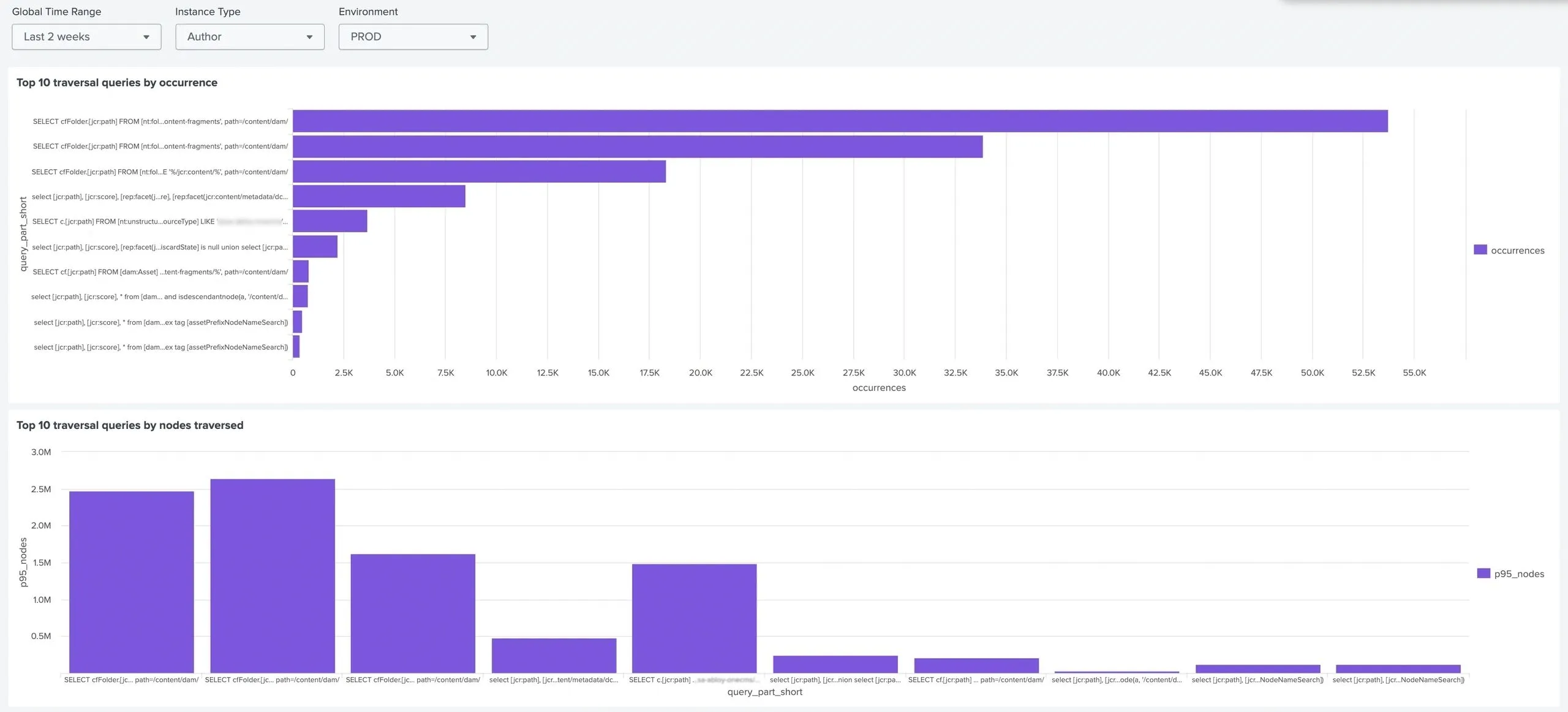
- Logs are filled with errors and slow database queries
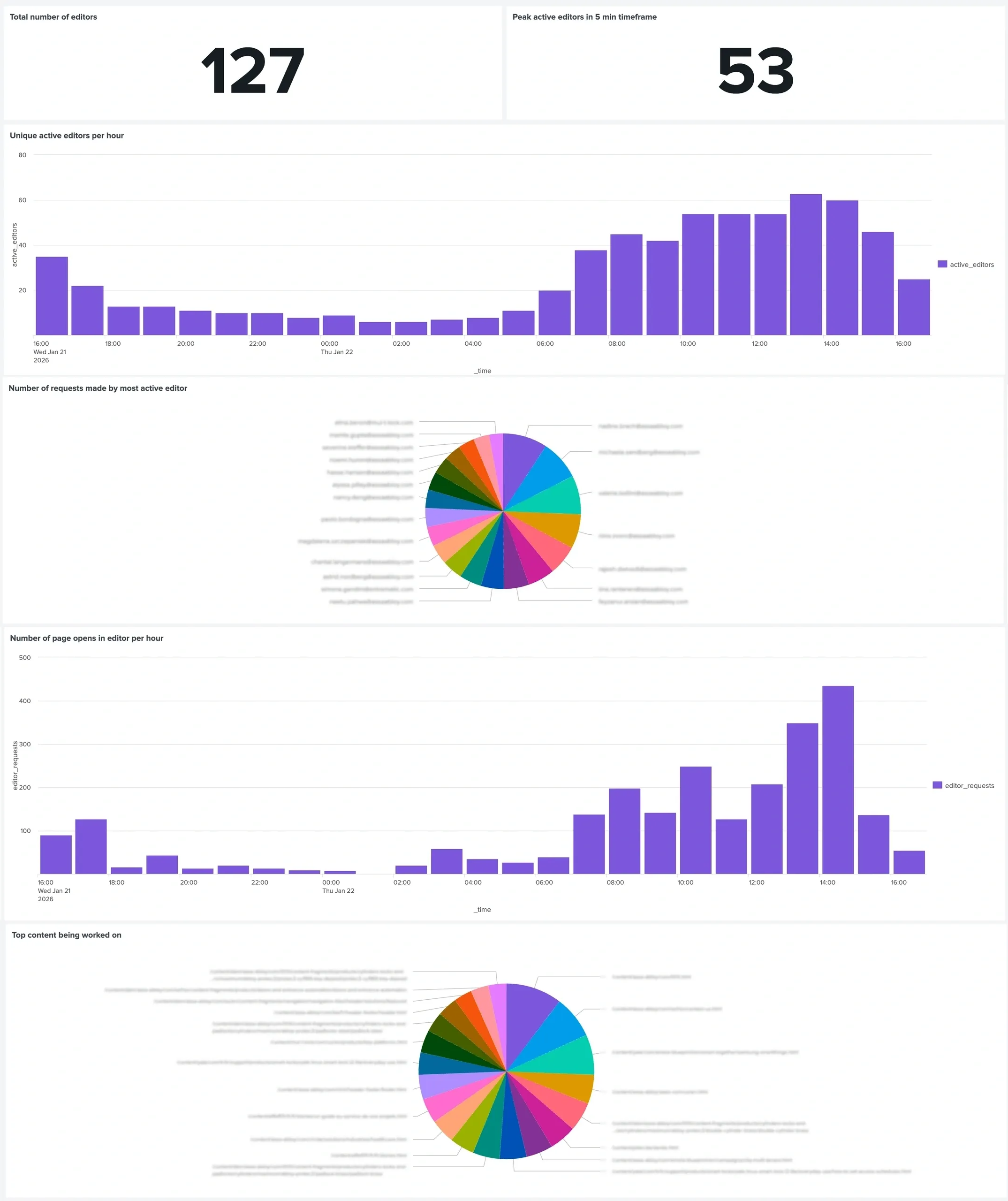
Without observability across frontend, backend, integrations, and authoring workflows, teams discover problems only when they become expensive business issues. At that stage, remediation is significantly more complex and costly than continuous monitoring would have been.
Delivery Without Clear Ownership
Many enterprise AEM platforms are designed by one group, delivered by another, and operated by a third.
Over time, responsibility becomes fragmented across vendors, departments, and contracts. Architectural decisions are documented, but not owned. Operational concerns are escalated, but not resolved at the structural level. Delivery is optimized for throughput rather than accountability.
When performance degrades or complexity increases, there is no single technical owner responsible for system-level coherence. Each team optimizes its own scope, while the platform as a whole becomes harder to reason about.
This is how platforms degrade silently, not because of a single mistake, but because no one owns the system end-to-end.
Cloud Migration Won’t Fix This
Cloud, headless, composable, or modern frontend stacks do not fix structural delivery problems.
Moving an unstable AEM platform to AEM as a Cloud Service (AEMaaCS) does not remove architectural debt. In many cases, it makes hidden issues more visible. Customizations that were tolerated on-prem become blockers in the cloud. Poor boundaries, excessive coupling, and unclear ownership surface as deployment instability and operational friction.
If ownership, architectural discipline, and delivery models do not change, the same problems reappear in a different form. Technology amplifies delivery models. It does not correct them.
What Long-Lived AEM Platforms Have in Common
AEM platforms that remain healthy and adaptable over many years share clear structural traits:
- Small, senior delivery teams
- Architects involved beyond design
- Clear ownership across architecture, delivery, and operations
- AEM used for what it does best
- Supporting services built around it, not inside it
- Continuous monitoring across frontend, backend, and integrations
- Technical debt tracked, visualized, and addressed continuously
- Regular refactoring aligned with evolving AEM capabilities
These platforms evolve gradually and predictably instead of requiring periodic replatforming or emergency modernization initiatives.
The Hard Truth About Enterprise AEM Delivery
The common way to destroy an enterprise AEM platform is simple:
- Design it well, but then soon fade out senior expertise, as they are considered expensive
- Hand delivery over to less experienced teams without proper ownership, ignoring long-term consequences
- The platform will still launch, it will even "work" for years, until change becomes too expensive
Enterprise organizations invest millions in AEM platforms, often treating them as strategic digital infrastructure. Watching that investment erode through diluted ownership is entirely avoidable.
A Better Way Forward
AEM is not fragile, but bad delivery models are. AEM platforms need:
- Explicit ownership
- Disciplined boundaries
- Continuous architectural involvement
- Teams optimized for long-term change, not short-term throughput
When those conditions exist, AEM remains a powerful enabler instead of a bottleneck.
If you are evaluating how your delivery model is structured, our approach to architectures that survive real delivery and long-term production use outlines the principles behind sustainable AEM platforms.
Conclusion
Enterprise AEM platforms are long-term assets, not short-term projects. Their success is determined less by how clean the architecture looks at launch and more by how consistently ownership, discipline, and senior expertise are maintained over time.
Complexity compounds when no one owns the system end-to-end. Stability compounds when architectural responsibility remains explicit. The difference between a platform that requires replatforming after five years and one that evolves predictably for a decade is rarely technology. It is governance.
If your AEM platform feels increasingly fragile, the problem is likely structural, not technical. The earlier those structures are corrected, the cheaper and safer the correction will be.
If you are approaching major architectural decisions, cloud migration, or performance remediation, a focused, time-boxed engagement centered on ownership, risk exposure, and long-term viability can surface structural weaknesses before they become materially costly.