130+ brand websites
Every brand runs on one shared design system, components, and templates, with its own visual identity. Some sites are small, others serve 60+ markets.

About
A global multi-brand manufacturer, centralized on AEM as a Cloud Service and stable for more than six years.
We helped a global multi-brand manufacturer move its brand websites onto one centralized Adobe Experience Manager as a Cloud Service platform. Today, 130+ brand websites share one design system, the same components, and the same templates while keeping their own look and feel, and the platform is run by the same lean team that has built it since the start.
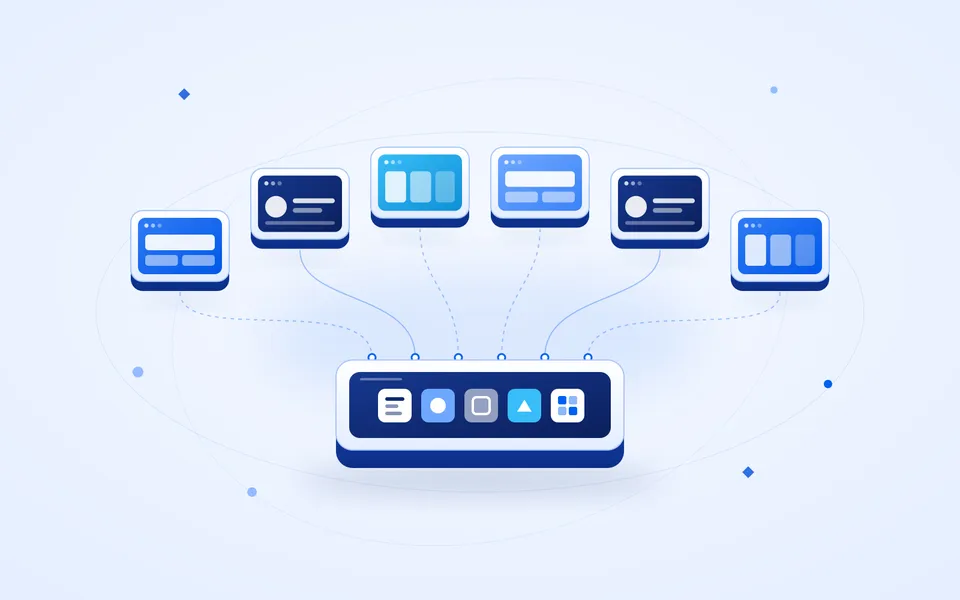
Every brand runs on one shared design system, components, and templates, with its own visual identity. Some sites are small, others serve 60+ markets.
The platform has run in production for more than six years and stays current with Adobe's AEM as a Cloud Service releases.
Three frontend and three backend developers and two QA engineers, supported by a solution architect, product owner, and Scrum Master. The same team since day one.
A group with more than 130 brands needs every brand to look and feel distinct, while still running one efficient, governed digital platform. Building and operating separate websites per brand multiplies licences, hosting, operations, and development effort, and makes quality and security hard to keep consistent.
The goal was a single platform that scales to every brand without turning into a slow, overly customized system that needs an ever-growing team to maintain.
One AEM as a Cloud Service platform for all brands, kept close to the product rather than heavily customized.
A shared design system is the foundation of the platform. It defines the components, patterns, and design tokens every brand builds on, and lives in a frontend fully decoupled from AEM.
Integrations and business logic that do not belong in the CMS run as supporting microservices built around AEM.
Two dedicated QA engineers and automated testing at every level keep releases predictable across 130+ websites.
More than six years in production, up to date with Adobe's releases, and without the instability that comes from heavy customization.
Centralizing licences, operations, and the development team removes the duplication of running separate brand platforms.
A core team of eight supports 130+ brand websites. With AI in the daily workflow, it delivers more without growing.
Platforms like this rarely fail because of the technology. They fail when every new requirement becomes a customization, and when the answer to slower delivery is a bigger team. This platform stayed fast and maintainable because of a few deliberate choices:
We wrote more about why adding developers often slows platforms down in The AEM Team Budget Trap.